
Connector Architecture and Military Interface Requirements
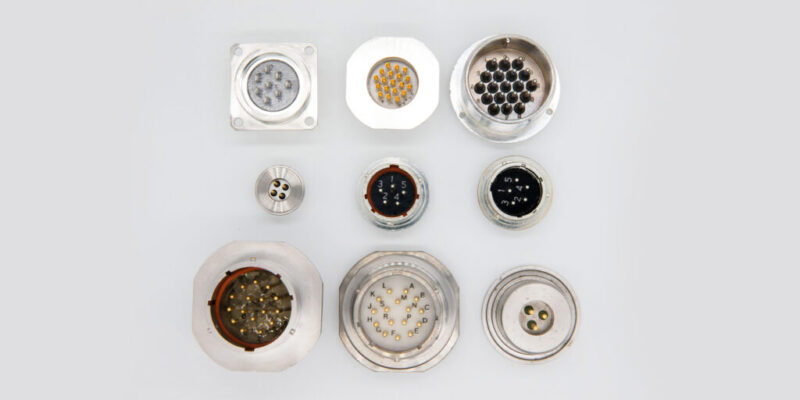
MIL-DTL-38999 hermetic connectors provide environmentally sealed electrical interfaces for aerospace and defense equipment requiring controlled connector geometry, mechanical durability, and hermetic isolation. The MIL-DTL-38999 family covers circular connectors with multiple shell sizes, coupling mechanisms, and contact arrangements, allowing engineers to select configurations based on packaging constraints and electrical requirements. Unlike conventional environmentally sealed connectors, hermetic versions incorporate a permanent barrier between conductors and the connector shell. Glass-to-metal seals provide this barrier while electrically isolating individual contacts and maintaining continuity across a sealed bulkhead. Selection should begin with the applicable connector series, insert arrangement, mating compatibility, environmental requirements, and qualification documentation.
Hermeticity, Electrical Insulation, and Material Selection
Connector performance depends on the interaction between the metallic shell, conductive contacts, and insulating glass. Engineers must account for coefficient of thermal expansion (CTE) compatibility to prevent tensile stress, glass cracking, and leakage during temperature cycling. Typical design considerations include helium leak rate, insulation resistance, dielectric withstand voltage, contact resistance, and operating temperature. Kovar, stainless steel, and other engineering alloys may be selected according to the sealing architecture and mechanical requirements. For high-reliability programs, qualification should also address vibration, mechanical shock, mating durability, and corrosion resistance.
Integration into Aerospace and Defense Assemblies
Hermetic circular connectors are commonly specified for avionics, radar modules, guidance electronics, pressurized enclosures, and aerospace instrumentation. Their electrical and mechanical interfaces must be evaluated as part of the complete assembly rather than as isolated components. Bulkhead mounting geometry, flange design, contact termination, and cable routing can influence sealing integrity and maintainability. Engineers should distinguish connector interface compliance from completed assembly qualification because compliance with one specification does not automatically establish suitability for every application. A well-defined procurement drawing should identify the required leak-test method, electrical acceptance criteria, applicable military specification, and environmental qualification requirements.
Custom MIL-Spec Connector Manufacturing
Complete Hermetics offers MIL-DTL-38999 circular hermetic connectors and custom sealing solutions for demanding aerospace and defense applications. Its website identifies nine shell sizes, three coupling methods, and multiple contact arrangements within the MIL-DTL-38999 family. The company also manufactures Glass-to-metal seals, Ceramic-to-metal seals, Hermetic feedthroughs, Hermetic headers, and specialized electrical assemblies. Engineering teams can discuss shell configurations, conductor arrangements, installation methods, and application-specific performance requirements before selecting a connector design. For custom MIL-spec hermetic connectors, contact Complete Hermetics to discuss drawings, technical specifications, and production requirements.
Get in Touch with Complete Hermetics Today:
- Website: www.completehermetics.com
- Contact Form: https://www.completehermetics.com/contact-us/
- Phone: 714-265-1238
- Email: info@completehermetics.com