
How Hermetic Seals Protect Critical Electronic Systems
Hermetic seals are the foundation of reliable electronic packaging, providing an airtight barrier that protects sensitive components from moisture, gases, chemicals, dust, and other environmental contaminants. In industries where equipment must perform continuously for years without failure, a dependable hermetic seal is not simply an advantage—it is a necessity. Whether used in aerospace satellites, implantable medical devices, military electronics, semiconductor equipment, or energy systems, hermetic seals help maintain the integrity of sensitive electronics while preserving long-term performance. These precision-engineered sealing solutions also reduce corrosion, electrical degradation, and premature component failure, lowering maintenance costs and improving product reliability. As technology advances and electronic systems become increasingly compact and sophisticated, the importance of high-quality hermetic sealing continues to grow.
Advanced Sealing Technologies for Reliable Performance
Modern hermetic seals are manufactured using advanced technologies such as Glass-to-metal seals and Ceramic-to-metal seals, both of which create durable, leak-tight bonds between conductive materials and protective housings. Each sealing method offers unique advantages depending on the application’s electrical, thermal, and mechanical requirements. Engineers carefully select materials based on factors including thermal expansion, operating temperature, voltage, pressure, and environmental exposure. These precision-engineered seals are designed to withstand vibration, thermal cycling, corrosion, and mechanical stress while maintaining exceptional electrical insulation. By combining proven sealing technologies with precision manufacturing, hermetic components continue to deliver dependable performance in some of the world’s most demanding environments.
Applications Across Multiple High-Reliability Industries
The versatility of hermetic seals makes them essential across a broad range of advanced industries. Aerospace manufacturers depend on hermetic sealing to protect avionics, satellites, spacecraft, and navigation systems operating under extreme environmental conditions. Medical device companies use hermetic connectors, hermetic feedthroughs, and sealed electronic assemblies in pacemakers, neurostimulators, imaging systems, and diagnostic equipment where patient safety depends on long-term reliability. Semiconductor manufacturers, defense contractors, renewable energy companies, industrial automation providers, and scientific research laboratories also integrate hermetic sealing technologies into hermetic packages and hermetic headers to ensure stable electrical performance and environmental protection. Their ability to prevent contamination while preserving electronic functionality makes hermetic seals a critical component in today’s high-performance electronic systems.
Complete Hermetics Provides Custom Hermetic Sealing Solutions
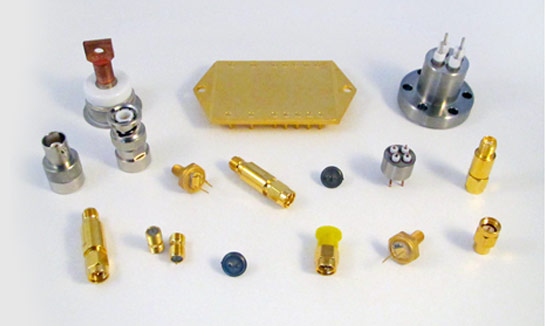
When your application requires dependable Hermetic seals, Complete Hermetics delivers precision-engineered solutions backed by extensive hermetic manufacturing expertise. We are a custom manufacturer specializing in Hermetic seals, Glass-to-metal seals, Ceramic-to-metal seals, hermetic connectors, hermetic feedthroughs, hermetic headers, hermetic packages, vacuum feedthroughs, and complete custom hermetic solutions designed to meet your exact engineering specifications. Our experienced engineering team partners with customers from concept and prototype development through production manufacturing, ensuring every product meets demanding electrical, mechanical, and environmental requirements. Whether you need a standard hermetic component or a fully customized sealing solution, Complete Hermetics is committed to delivering exceptional quality, responsive engineering support, and long-term reliability.
Contact Complete Hermetics today to discover how our custom hermetic sealing solutions can help protect your next high-reliability application.
Request a Custom Hermetic Solution:
- Contact Form: https://www.completehermetics.com/contact-us/
- Phone: 714-265-1238
- Email: info@completehermetics.com
- Website: www.completehermetics.com