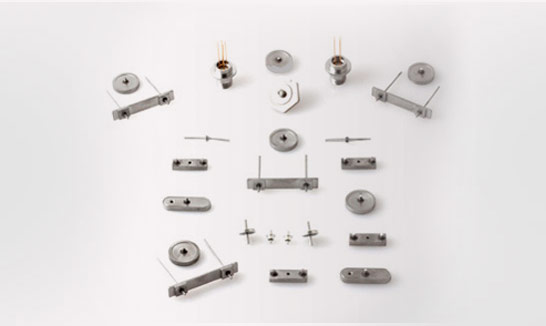
Titanium headers

Ensure System Integrity with Quality Battery End Seals

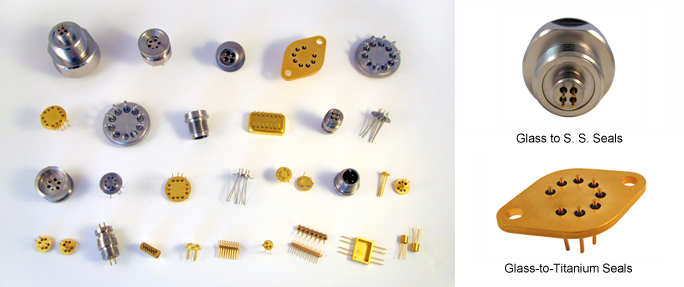
No matter what technology you depend upon, system integrity is crucial. Advanced battery end seals utilize custom glass-to-metal sealing solutions capable of withstanding harsh environments that encounter extreme temperatures, humidity, pressure and electrochemical corrosion.

To ensure quality engineering, Complete Hermetics inspects and conducts rigorous testing for leakage rates, high energy isolation and break down voltage. Advanced material specifications make our battery end covers and capacitor lids ideal for many industries:

  • Communication systems
  • Medical and health equipment
  • Automotive applications
  • Sensor and monitor systems
  • Weapons systems

Lithium battery sealed lids are especially reliable. We offer a complete line of titanium connectors and terminals for equipment that requires excellent lithium battery performance.

Material Specifications for Battery End Seals

With a choice of materials, your company can select battery components tailored for specific applications. Body makeup includes a variety of high-quality metals: titanium, stainless steel, aluminum and more. Available pin materials include molybdenum, alloy 52, titanium and stainless steels, while glass materials include Corning 9010, Corning 9013, Cabal 12 and options for custom materials.

Lithium battery sealed lids provide the best technology for longevity and safety, ensuring steady performance in many crucial functions. At Complete Hermetics, we understand the need to keep systems going at all times. Talk to our experts today for help in selecting the optimal product for your critical applications.

Titanium headers

What Are Lithium Battery Seals?

Lithium battery seals preserve battery life by preventing the loss of electrolytes. A lithium battery glass-to-metal sealed lid is extremely effective in making a good seal.

Why Lithium Battery Seals Are Important

During normal use, a battery generates gas. This won’t be a problem unless the pressure inside the battery gets too high. Without a way to release the gas, the cell could rupture and damage the battery.

Specially-made battery end seals solve this problem by providing a low-pressure venting system. The battery end has a gasket that seals onto the cell. That gasket has a vent mechanism to release pressure, protecting the battery from damage.

Caring for a Lithium Battery

Lithium battery seals prolong the life of your battery but you can also protect it by making sure it doesn’t get too hot. Keep these things in mind:

  • Provide space between the battery and any heat source.
  • Keep your battery away from transistors and transformers.
  • Try to keep your battery between 20-25 degrees Celcius.
  • Place your battery near an air inlet rather than an exhaust vent.

We offer a wide range of sealing technologies, including glass-to-metal lids that are highly reliable and can handle high electrical currents as well as electrochemical corrosion. If you are looking for a custom-made product, contact us.

Vacuum Viewports

How Can High Vacuum Viewports Prevent Outgassing Risks?

Monitor your equipment or transmit energy into a sealed system using vacuum viewports by Complete Hermetics. Review the common uses of viewports and compare window materials today to find a product that fits your laser or infrared needs.

Typical Uses

The most basic use of a vacuum viewport is a window to view the interior of a sealed system. This application can assist you in monitoring the performance components in a vacuum. A more common application of hermetic viewports is to allow a wide spectrum of light to pass through in one or both directions.

Infrared and laser lights require a hermetic viewport to be transmitted through an otherwise sealed environment. A viewport plays a unique role in allowing a single type of light or wide spectrum light to send energy in and out of the hermetically sealed system. Here are a few industries where these components are commonly used:

  • Defense industry
  • Medical endoscopic fields
  • Space industry
  • Laser designation systems

Common Viewport Materials

Vacuum windows need to use specific materials to allow energy to pass through without compromising the structure of the chamber. These are the most common materials used by Complete Hermetics to create viewport windows:

  • Zinc selenide
  • Fused silica
  • Sapphire
  • Magnesium fluoride
  • Glass

Explore our line of vacuum viewports today if you need a customized solution for your infrared, laser or optical application. Work with Complete Hermetics to achieve industry-leading quality control using standard or customized viewport solutions.

Vacuum Viewports

How Are Vacuum Viewports Used?

Monitor your equipment or transmit energy into a sealed system using vacuum viewports by Complete Hermetics. Review the common uses of viewports and compare window materials today to find a product that fits your laser or infrared needs.

Typical Uses

The most basic use of a vacuum viewport is a window to view the interior of a sealed system. This application can assist you in monitoring the performance components in a vacuum. A more common application of hermetic viewports is to allow a wide spectrum of light to pass through in one or both directions.

Infrared and laser lights require a hermetic viewport to be transmitted through an otherwise sealed environment. A viewport plays a unique role in allowing a single type of light or wide spectrum light to send energy in and out of the hermetically sealed system. Here are a few industries where these components are commonly used:

  • Defense industry
  • Medical endoscopic fields
  • Space industry
  • Laser designation systems

Common Viewport Materials

Vacuum windows need to use specific materials to allow energy to pass through without compromising the structure of the chamber. These are the most common materials used by Complete Hermetics to create viewport windows:

  • Zinc selenide
  • Fused silica
  • Sapphire
  • Magnesium fluoride
  • Glass

Explore our line of vacuum viewports today if you need a customized solution for your infrared, laser or optical application. Work with Complete Hermetics to achieve industry-leading quality control using standard or customized viewport solutions.

Custom Hermetic Feedthroughs

What Are Electrical Feedthroughs For?

You might not think that there are many components that can be found in X-ray machines, transformers and furnaces. But electrical feedthroughs are commonly used in a wide variety of technologies to help make sure that electricity doesn’t escape and cause malfunctions. It is important to know what these feedthroughs are used for and to appreciate this important piece of technology that keeps so many different technologies running.

The Importance of Vacuums 

Creating a vacuum guarantees that the electricity being transported from one part of a machine to another does not get out. Vacuum feedthroughs effectively make sure that the electricity is distributed safely.

Using Seals

The key to creating a vacuum is the type of seal that is used. Hermetic feedthroughs use glass-to-metal seals and ceramic seals to create this vacuum. When building a new seal, it is extremely important that the materials used are able to withstand intensive use and not break down over time.

This is why many seals are made with glass and ceramics; these materials are designed to withstand extreme temperatures, as well as other wear and tear. Many of these seals are used in technology like furnaces that operate at extreme temperatures. Making sure the seals do not break down easily will make sure the machine runs smoothly.

Custom Hermetic Connectors

How to Choose the Right Hermetically Sealed Connectors

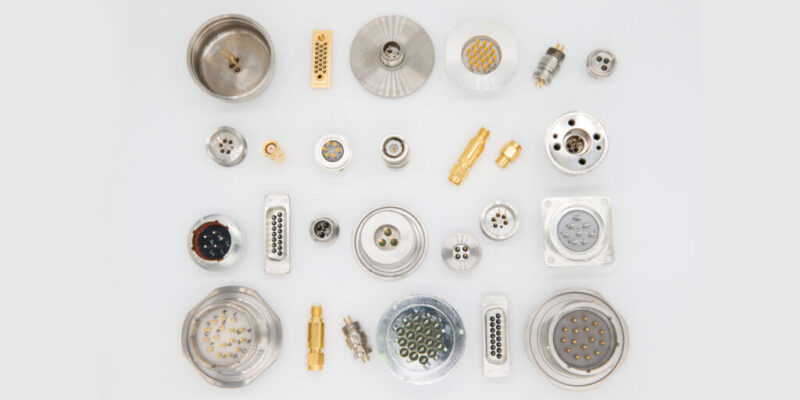
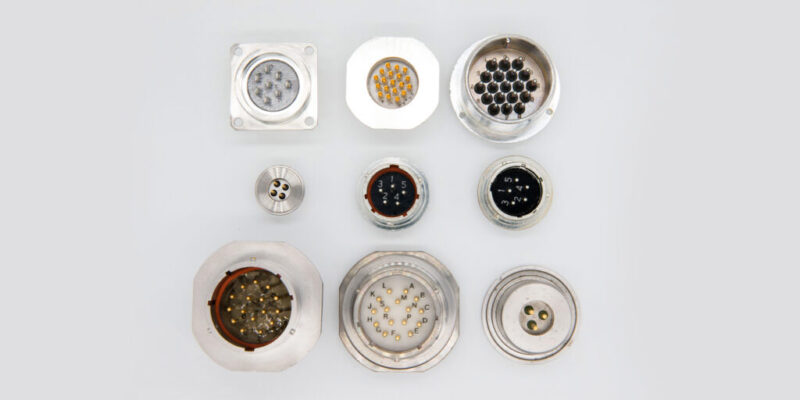
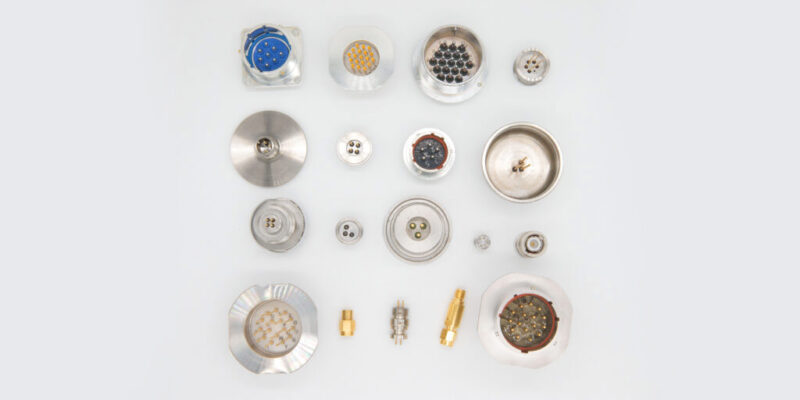
Extremely harsh environments call for extra protection to ensure the integrity of a system. Hermetically sealed connectors provide such protection by keeping all air, moisture and contaminants out. If you’re looking for the right connectors for your application, consider these tips to begin your search.

  1. Select the Shell

There are two major types of connector shell shapes: circular and rectangular. Sizes typically range from 0.25 inches to 3.0 inches in diameter. Connectors can be made from a variety of materials such as:

  • 300 Series Stainless Steel
  • Cold Rolled Steels
  • Kovar
  • Inconel
  • Titanium
  • Aluminum

Kovar is a nickel- and cobalt-based alloy that contains iron, and Inconel is a nickel-based alloy that contains iron and chromium. Titanium and aluminum hermetically sealed connectors are lightweight but still provide the same quality of seal as heavier materials.

  1. Select the Pins

To select the correct pin configuration, determine how many pins you need and how they need to be oriented. Pin end shapes usually include rounded, eyelet and hook types and range from 4 AWG to 16 AWG in size. Typical pin materials are:

  • Kovar and Copper Cored Kovar
  • Alloy 52
  • Inconel
  • Molybdenum
  • Stainless Steel

Alloy 52 is composed of nickel and iron and works well for sealing glass to metal, while molybdenum is known for reducing wear and friction.

  1. Select the Finish

The finish is important because it protects hermetically sealed connectors from the environment. Standard finishes include:

  • Bright Tin Plating
  • Electroless/Electrolytic Nickel Plating
  • Copper Plating
  • Gold Plating
  • Silver Plating

Though the finish primarily protects the connector against corrosion, it is also a considered design element that makes your system look sharp. For instance, bright tin plating creates a shiny exterior, while gold plating can make the connectors stand out.

Ask the Pros

If you’re having trouble deciding which hermetically sealed connectors are right for your application, call your dealer for help. The experts can help you select the right size, shape and finish to ensure the integrity of your system.

Hermetically Sealed Connectors

What Are Hermetically Sealed Connectors?

Hermetically sealed connectors are commonly used when machines or equipment will be exposed to harsh environments. Some items, such as photographic and surveillance equipment mounted on unmanned vehicles, are exposed to severe weather, fluctuating atmospheric conditions, and high altitudes. Hermetically sealed connectors are chosen to connect vacuum-sealed boxes and equipment because they can maintain the airtight condition even under severe flight conditions. It’s also common to find a hermetically sealed connector in use on submarines and satellites in orbit. Although the connectors are exposed to very different environments, their ability to withstand pressure differences and prevent moisture seepage into machinery is consistent.

A Vital Component of Protection From Moisture

In these, and other conditions, packaging technology is used to prevent gases from moving through barriers because of the connector. When a high-pressure differential barrier is built to allow for the passage of electric currents, there’s a potential for gases or moisture to also penetrate the barrier. Appropriately-constructed, hermetically sealed connectors will be effective against those environmental exposures and should be unaffected by moisture as well as resistant to corrosion. Ultimately, the purpose of the hermetically sealed connectors isn’t just to prevent gas and moisture to get beyond the barrier, but to protect sensitive electronic systems from malfunctions related to moisture.

The Creation of Hermetic Feedthroughs

Hermetic feedthroughs are designed specifically to all some substances or energy to pass from inside or outside a hermetically-sealed area to the other side. The feedthroughs must deliver both hermeticity and electrical isolation. They must be secure enough to prevent even the smallest degree of leakage while maintaining a powerful vacuum. There are three main types of hermetic feedthroughs: low voltage, water-cooled and RF (high frequency), and high-voltage feedthroughs. Applications for these items include furnaces, analysis equipment, satellite instrumentation, particle accelerators, and X-ray equipment.

How Is the Hermetic Seal Achieved?

How are hermetic feedthroughs achieved? When a glass-to-metal hermetic feedthrough is desired, industry leaders use high temperatures to melt glass to the point that they can be tightly bonded to metal. When done correctly, these feedthroughs can be used in applications such as those involved in electrical situations. These products are highly resistant to dramatic temperature changes, as well as fluctuations in pressure and humidity. Many of these products are plated to resist corrosion as well as improving the items capacity for wire bonding or soldering. Naturally, the pin and body formation of some hermetic feedthroughs require even tougher standards of excellence. This is the case for items destined to be found in medical equipment, especially used in diagnosis and sensing.

Choosing the Right Hermetic Feedthrough and Seal

Although you’ve developed a system that requires a hermetic feedthrough and seal, you may not have the knowledge and experience to fully know what type of system and materials should be used to be most effective when your product is in use. Our engineers specialize in hermetic feedthroughs and seals in many different industries to help you move forward with your project.

There are many different ways to create the vacuum and hermetic feedthrough. In a glass-to-metal seal, the methodology of design and development depend on multiple factors. There are plating capabilities which let the hermetic seal work better under different conditions. If your project operates under higher voltage or temperatures, a ceramic-to-metal application may the right product to fit your needs. Because we have worked with medical, military, optics, and aerospace organizations, we have the depth of knowledge to design a prototype to meet your specifications.

Discuss your project with our engineers to find the perfect hermetic feedthrough and sealing system that matches your industry. We design and manufacture custom products that work under specific conditions. Our products are tested before use to ensure the reliability of the seal and feedthrough. We understand that you need the materials to fit the scope and scale of the project while managing your budget. Contact us and let us help.

What Kind of Hermetic Feedthrough Should You Choose?

You rely on a steady connection of power to get jobs done in the most hostile climates, and you need a hermetic feedthrough that you can rely upon. There are several kinds of feedthroughs available, so look carefully before selecting.

Glass to Metal

A glass to metal hermetic feedthrough is made of glass which is heated up and used in its molten state. This is a durable feedthrough that can operate under all conditions and transfer electricity at high voltages.

Ceramic to Metal

Ceramic to metal hermetic feedthroughs require a substantial amount of craftsmanship and time to make. They can be custom-made for specific uses and are ideal for jobs that require a certain kind of feedthrough.

Look for Quality

Whatever kind of hermetic feedthrough you use, make sure you are purchasing one that is made of high-quality materials with construction that prevents all kinds of leaks. Heavy duty feedthroughs are often used in the military and for medical uses and provide a reliable seal and connection time after time. Check your hermetic feedthrough periodically for signs of wear and tear and be sure to replace as needed. The highest-quality feedthrough are virtually leak resistance and will never fail to deliver.