
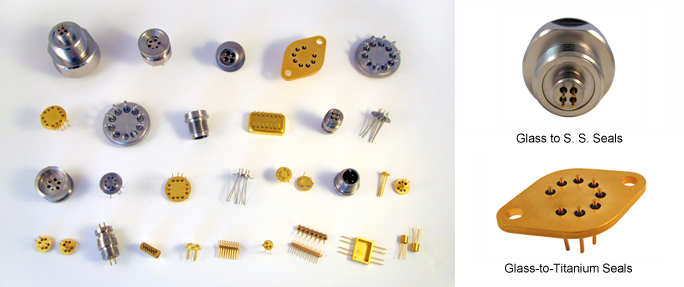
Vacuum Feedthroughs and Bulkhead Hermetic Solutions

Why Vacuum Feedthroughs Are Critical

Vacuum feedthroughs are specialized hermetic components that allow electrical power or signals to pass through vacuum or pressure barriers without leakage. Even microscopic leaks can compromise vacuum integrity, contaminate sensitive processes, or disrupt system performance. As a result, vacuum feedthroughs are essential in applications requiring precise environmental control.

High-Vacuum and Bulkhead Designs

Hermetic bulkhead feedthroughs provide multiple electrical pathways through a single flange-mounted interface. This design reduces the number of enclosure penetrations, improving system reliability and simplifying installation. Bulkhead feedthroughs are commonly used in high-vacuum chambers, pressure vessels, and sealed instrumentation housings.

Material Compatibility and Precision Engineering

Vacuum feedthroughs are manufactured using materials such as stainless steel, Kovar, titanium, and high-purity ceramics to ensure compatibility with vacuum environments. These materials exhibit low outgassing, excellent thermal stability, and corrosion resistance. Precision manufacturing and sealing techniques are required to meet stringent leak-rate specifications, often verified through helium leak testing.

Performance in Sensitive Systems

In vacuum systems, performance margins are extremely narrow. Feedthroughs must maintain electrical insulation, mechanical stability, and hermetic integrity under thermal cycling, vibration, and pressure differentials. Poorly designed feedthroughs can lead to system downtime, safety risks, or costly repairs.

Critical Applications

Vacuum feedthroughs are widely used in semiconductor fabrication equipment, aerospace simulation chambers, research laboratories, medical imaging systems, and high-energy physics instrumentation.

Contact Complete Hermetics Today for Your Hermetic Solutions

Complete Hermetics designs and manufactures custom vacuum feedthroughs and hermetic bulkhead feedthroughs, including multi-pin configurations, glass-to-metal and ceramic-to-metal seals, and vacuum-rated assemblies. The company also supplies hermetic connectors, headers, hermetic packages, and battery end seals to support fully integrated systems. With rigorous testing and precision engineering,  Complete Hermetics delivers vacuum solutions customers can depend on.

Glass-to-Metal Seals for Precision Hermetic Technology

How Glass-to-Metal Seals Work

Glass-to-metal seals are created by heating glass to a molten state and bonding it directly to metal under carefully controlled conditions. As the materials cool, the glass forms a strong, hermetic bond with the metal, creating an airtight and electrically insulating seal. This process allows electrical conductors to pass through metal housings without permitting moisture, gas, or contaminants to enter the sealed environment. Because of their proven reliability, glass-to-metal seals remain one of the most widely used hermetic sealing technologies across multiple industries.

Performance Advantages of Glass Sealing

One of the key advantages of glass-to-metal seals is their ability to maintain hermetic integrity under pressure changes, humidity exposure, and moderate temperature extremes. Glass provides excellent dielectric strength, corrosion resistance, and chemical stability, making it suitable for long-term use in harsh environments. Compared to epoxy or mechanical sealing methods, glass-to-metal seals offer significantly longer service life and more predictable performance over time.

Material Compatibility and Stability

Successful glass-to-metal sealing depends on matching the coefficient of thermal expansion (CTE) between the glass and metal components. Materials such as Kovar, Alloy 52, stainless steel, and copper-based alloys are commonly used to achieve this balance. When properly engineered, these seals tolerate thermal cycling and mechanical shock without cracking or leakage, making them suitable for both static and dynamic applications.

Manufacturing Precision and Repeatability

Glass-to-metal sealing requires precise control over glass composition, firing temperature, and cooling rates. This level of control ensures consistent quality and repeatability across production runs. As a result, glass-to-metal seals are ideal for both prototype development and high-volume manufacturing, allowing manufacturers to scale production without sacrificing reliability.

Common Applications

Glass-to-metal seals are widely used in glass-to-metal sealed lids, battery end seals, capacitor end seals, sensors, medical implants, and industrial electronics. They are also commonly found in automotive systems, pressure sensors, and energy storage devices where cost-effective hermetic performance is required.


Contact Complete Hermetics

Complete Hermetics is a custom manufacturer of hermetic sealing solutions, specializing in glass-to-metal seals, ceramic-to-metal seals, hermetic connectors, hermetic feedthroughs, hermetic headers, TO headers, vacuum feedthroughs, and battery end seals. The company designs and produces hermetically sealed components and custom hermetic assemblies for aerospace, defense, medical, energy, and telecom applications, delivering reliable performance in extreme environments from prototype development through full-scale production, backed by deep engineering expertise.

Hermetic Feedthroughs for Electrical and Vacuum Applications

Purpose of Hermetic Feedthroughs

Hermetic feedthroughs allow electrical current or signals to pass into or out of sealed or vacuum systems while maintaining airtight integrity. Terms such as vacuum feedthroughs, electrical feedthroughs, glass feedthroughs, and ceramic feedthroughs are often used interchangeably, but all serve the same critical function.

Multi-Pin and Bulkhead Designs

Multi-pin hermetic feedthroughs and electrical bulkhead feedthroughs route multiple electrical connections through a single flange-mounted bulkhead. This reduces enclosure penetrations, improves system reliability, and simplifies system architecture. Contacts may be laser-welded or solder-in depending on electrical load and mechanical requirements.

Extreme-Environment Reliability

Hermetic feedthroughs are engineered to withstand high pressure, vacuum, vibration, and thermal extremes. Materials such as Kovar, stainless steel, titanium, and ceramic insulators provide durability and electrical isolation in harsh conditions.

Electrical Safety and Longevity

Feedthroughs also act as a safety barrier, preventing arcing and leakage in high-voltage systems. Proper spacing, insulation thickness, and material selection ensure long-term electrical continuity.

Industrial and Medical Uses

Applications include submersible pumps, downhole drilling instrumentation, exploratory equipment, implantable medical devices, and cryogenic surgical probes.


Contact Complete Hermetics

Complete Hermetics manufactures custom glass-to-metal and ceramic-to-metal hermetic feedthroughs, including bulkhead feedthroughs, multi-pin designs, and vacuum-rated configurations. The company also supplies hermetic connectors, headers, and sealed packages to support fully integrated solutions. From design to production, Complete Hermetics delivers reliable feedthrough technology for extreme environments.

Contact Info:

Hermetic Seals for High-Pressure and Harsh Environments

What Are Hermetic Seals?

Hermetic seals are engineered to create a completely airtight barrier that prevents moisture, gas, and contaminants from entering sensitive electronic or mechanical systems. These seals are essential in applications where even microscopic leakage can cause performance degradation, safety issues, or catastrophic system failure. Industries such as aerospace, defense, medical devices, energy, and offshore drilling rely on hermetic sealing to protect mission-critical components operating in extreme conditions.

High-Pressure and Corrosion Resistance

Unlike conventional gaskets or epoxy-based sealing methods, hermetic seals prevent gas transmission through pressure boundaries. Glass-to-metal seals and ceramic-to-metal seals are the most widely used hermetic technologies because they offer excellent electrical insulation, corrosion resistance, and mechanical strength. These seals are specifically designed to withstand high pressure, vibration, thermal cycling, and chemically aggressive environments.

Materials and Sealing Technologies

Hermetic seals are manufactured using materials such as Kovar, stainless steel, Alloy 52, titanium, and aluminum, selected for controlled thermal expansion and long-term structural stability. Glass and ceramic sealing processes are precisely controlled to prevent cracking during temperature changes. These technologies ensure predictable performance across wide temperature ranges and long service lifetimes.

Lifecycle Reliability and Compliance

Hermetic seals also play a critical role in safety, regulatory compliance, and lifecycle cost reduction. Poor sealing can lead to corrosion, insulation breakdown, or electrical failure. Hermetic seals are commonly validated using helium leak detection, thermal shock testing, and pressure cycling to ensure long-term durability in regulated industries.

Applications Across Industries

Hermetic seals are used in medical implants, aerospace avionics, lithium battery assemblies, semiconductor housings, downhole drilling tools, and high-vacuum systems. They are also increasingly used in automotive and electric vehicle electronics, where moisture resistance and long operational life are essential.

Contact Complete Hermetics

Complete Hermetics is a custom manufacturer of glass-to-metal seals, ceramic-to-metal seals, hermetic connectors, hermetic feedthroughs, hermetic headers, and hermetically sealed packages engineered for extreme environments. In addition to precision sealing solutions, the company offers vacuum feedthroughs, battery end seals, TO headers,  and power packages for aerospace, defense, medical, energy, and telecom applications. From prototype development through full-scale production, Complete Hermetics partners closely with customers to deliver precision-engineered hermetic solutions with unmatched reliability.

Contact Info:

Vacuum Feedthroughs for High-Integrity Sealed Systems

Why Vacuum Feedthroughs Are Essential

Vacuum feedthroughs allow electrical, optical, fluid, or mechanical transfer into or out of a sealed vacuum chamber without compromising the chamber’s integrity. They are crucial in semiconductor processing equipment, scientific research instruments, aerospace simulation chambers, and industrial high-temperature vacuum furnaces. Even the slightest leak can affect process quality, research accuracy, or equipment performance—making hermetic sealing absolutely essential.

Design Requirements for High-Vacuum Environments

Vacuum feedthroughs require materials that tolerate thermal expansion, pressure gradients, plasma exposure, outgassing, and radiation. Complete Hermetics engineers each feedthrough using precision glass-to-metal or ceramic-to-metal bonds calibrated to maintain ultra-low leak rates under severe operating conditions. These feedthroughs maintain performance from cryogenic to extreme high-temperature environments.

Configurations & Materials

Vacuum, electric, glass, and ceramic feedthroughs—often used interchangeably—serve the same core purpose: to route electrical current into or out of a hermetic or vacuum system while preventing any gas leakage. Complete Hermetics designs and manufactures custom glass-to-metal and ceramic-to-metal feedthroughs, including multi-pin and bulkhead hermetic feedthroughs that provide multiple electrical paths through a single flange. Available in laser-weld or solder-in styles, these feedthroughs deliver reliable performance in harsh environments. They are widely used in submersible pumps, downhole drilling tools, exploration instruments, implantable medical devices, and cryogenic surgical probes, where stable electrical continuity and long-term hermeticity are mission-critical.

Applications in High-Tech Sectors

Vacuum feedthroughs support:

  • Plasma etching & PVD/CVD semiconductor tools
  • Space environment simulation chambers
  • Ion beam accelerators & laboratory research equipment
  • Industrial furnaces & metallurgical processing
  • Aerospace test stands requiring high vacuum integrity

Testing & Verification

Every feedthrough undergoes low-helium-leak testing, electrical resistance measurement, thermal cycling, and long-duration vacuum compatibility validation. These processes guarantee reliability in systems where contamination or pressure loss cannot be tolerated.

Contact Complete Hermetics Today for Your Hermetic Solutions

Complete Hermetics provides high-performance vacuum feedthroughs and hermetic sealing technologies. From glass-to-metal or ceramic-to-metal configurations, each feedthrough is engineered with exacting precision to meet your application requirements.

Medical Hermetic Seals for Life-Critical Electronic Devices

Why Hermetic Seals Are Essential

Medical hermetic seals play a critical role in ensuring the safety, reliability, and biocompatibility of implantable and diagnostic electronics. When devices operate inside the human body or are exposed to sterilization processes, they must withstand moisture, bodily fluids, chemical exposure, and extreme thermal variations. Even the smallest leak can cause internal corrosion, signal failure, or biological contamination. As modern medical devices become smaller yet more capable, the demand for advanced hermetic sealing technologies grows significantly.

Glass-to-Metal & Ceramic-to-Metal Sealing Technologies

Complete Hermetics designs medical-grade seals using glass-to-metal (GTM) and ceramic-to-metal (CTM) sealing methods. Glass seals provide cost-effective, high-strength bonding between metal housings and conductive pins, while ceramic seals are ideal for high-voltage or long-term implants due to their exceptional dielectric strength. Using materials such as titanium, stainless steel, and high-purity alumina ceramics, these seals are engineered to perform reliably in demanding biological environments.

Regulatory-Ready Testing & Biological Safety

Medical hermetic seals must meet FDA, ISO 14708, IEC 60601, and biocompatibility standards. Complete Hermetics performs rigorous testing—including helium leak detection, sterilization simulation, thermal shock, electrical insulation analysis, and X-ray inspection—to ensure every seal meets life-critical reliability requirements. Traceability, cleanliness, and manufacturing consistency are maintained at every step.

Applications in Modern Healthcare

Medical hermetic seals enable secure operation in:

  • Pacemakers & implantable cardioverter defibrillators (ICDs)
  • Neurostimulation & pain-management implants
  • Implantable batteries & power modules
  • Surgical navigation tools
  • Diagnostic imaging equipment
  • Long-term biosensor implants

Contact Complete Hermetics

For precision-engineered medical hermetic seals that support life-critical technology, trust the expertise of Complete Hermetics.

Hermetic Bulkhead Feedthroughs for Secure System Penetrations

What Are Bulkhead Feedthroughs?

Hermetic bulkhead feedthroughs are specialized sealing components that permit electrical conductors to pass through pressure boundaries while maintaining an absolute airtight separation between two environments. These components are essential for systems where internal integrity must not be compromised—such as vacuum chambers, propulsion systems, laboratory reactors, marine equipment, and industrial process vessels.

How Bulkhead Feedthroughs Maintain Integrity

Bulkhead feedthroughs must withstand intense mechanical stress, extreme temperatures, pressure cycling, chemicals, radiation, and vibration. Complete Hermetics engineers these feedthroughs using robust glass-to-metal and ceramic-to-metal sealing technologies that ensure leak rates as low as 1×10⁻⁸ cc/sec. These seals resist cracking, corrosion, and long-term fatigue.

Configuration & Mounting Options

Vacuum, electric, glass, and ceramic feedthroughs—terms often used interchangeably—serve the essential function of carrying electrical current into or out of a hermetic or vacuum system while maintaining an airtight seal. Complete Hermetics designs and manufactures custom glass-to-metal and ceramic-to-metal feedthroughs engineered to prevent gas transmission through pressure barriers.

The company also produces multi-pin hermetic feedthroughs and bulkhead electrical feedthroughs, which route multiple electrical paths through a single flange-mounted bulkhead. Available in laser-weld or solder-in configurations, these feedthroughs are built for extreme environments. They are used in submersible pumps, downhole drilling tools, exploration devices, implantable medical systems, and cryogenic surgical probes, where long-term electrical continuity and hermetic integrity are essential.

Industry Applications

Bulkhead feedthroughs are widely used in:

  • Aerospace propulsion and environmental testing
  • Subsea robotics & marine exploration vessels
  • Cleanroom vacuum chambers & semiconductor tools
  • High-pressure reactors and cryogenic systems
  • Defense-grade electronics and hardened enclosures

Material Strength & Long-Term Reliability

Using premium alloys such as titanium, Inconel, Kovar, and stainless steel, Complete Hermetics ensures mechanical stability under prolonged operational stress. Ceramic insulators and precision plating improve voltage tolerance and corrosion resistance.

Contact Complete Hermetics

For durable, precision-engineered hermetic bulkhead feedthroughs, trust the proven expertise of Complete Hermetics.

Contact Form: https://www.completehermetics.com/contact-us/ | Phone: 714-265-1238 | Email: info@completehermetics.com

Hermetic Feedthroughs for High-Reliability Sealing

What Are Hermetic Feedthroughs?

Hermetic feedthroughs are essential components that allow electrical signals, power, or data to pass through sealed enclosures without allowing any external elements—such as gas, fluid, vapor, or contaminants—to enter. These components are vital in aerospace avionics, semiconductor fabrication, medical implants, power systems, defense platforms, and industrial vacuum equipment. When systems are exposed to high pressure, vacuum, radiation, corrosive chemicals, or temperature fluctuations, hermetic feedthroughs act as the primary barrier protecting internal electronics and maintaining long-term operational stability.

How Hermetic Feedthroughs Maintain Airtight Integrity

A high-performance hermetic feedthrough is created through glass-to-metal or ceramic-to-metal sealing, a process in which insulating materials bond molecularly with the metal shell and internal pins. By carefully matching the coefficient of thermal expansion between materials, Complete Hermetics ensures the seal remains tight even under vibration, pressure cycling, and thermal shock. This engineering precision prevents micro-cracks, corrosion pathways, and seal degradation—factors that can cause catastrophic system failure.

Advanced Materials for Maximum Performance

Hermetic feedthroughs are constructed using specialized alloys such as Kovar, stainless steel, Inconel, and titanium, each chosen for its thermal stability and mechanical resilience. High-purity ceramics offer exceptional dielectric strength, while plating finishes—gold, silver, or nickel—enhance conductivity and corrosion resistance. These materials allow feedthroughs to survive extremely harsh operating environments, from deep-space vacuum to high-pressure oceanic applications.

Applications Across Industries

Hermetic feedthroughs are indispensable in:

  • Satellite propulsion and orbital control systems
  • Semiconductor vacuum etching and deposition chambers
  • Medical imaging, diagnostics, and implantable electronics
  • High-temperature industrial furnaces
  • Defense communication & targeting systems
  • Cryogenic and high-voltage environments

Custom Engineering Expertise

Every environment demands unique electrical, mechanical, and thermal characteristics. Complete Hermetics provides fully customized feedthrough solutions—with tailored pin counts, geometries, voltage ratings, sealing materials, and mounting styles. Engineers collaborate with customers throughout design, prototyping, and qualification to ensure maximum performance.

Contact Complete Hermetics:

For high-performance hermetic feedthroughs engineered for mission-critical applications, partner with Complete Hermetics—your trusted leader in precision hermetic sealing.

Hermetic Seals and Feedthroughs for Extreme Environments

Why Hermetic Seals Are Essential

Hermetic seals are critical to protecting sensitive electronics from gas, liquid, and pressure infiltration. Whether in aerospace flight control systems, industrial power assemblies, or medical equipment, the success of an electronic device often depends on the integrity of its hermetic sealing. When systems operate under high stress or environmental fluctuation, a small leak can lead to catastrophic failure.

Complete Hermetics Expertise

Complete Hermetics is a trusted hermetic seal manufacturer with decades of engineering experience. The company designs and fabricates both glass-to-metal and ceramic-to-metal feedthroughs, each tailored to meet precise mechanical, thermal, and electrical requirements. Every product undergoes helium leak detection, electrical insulation testing, and dimensional verification to ensure it exceeds global reliability standards. Their multidisciplinary team collaborates closely with clients to optimize performance, durability, and manufacturability for each application. With a commitment to innovation, Complete Hermetics continues to advance sealing technologies that meet the evolving needs of aerospace, medical, and defense industries.

Glass-to-Metal Seals and Applications

A glass-to-metal seal is formed when molten glass bonds tightly to metal under carefully controlled thermal expansion. The resulting structure creates a gas-tight joint ideal for devices exposed to temperature swings or humidity changes. Common applications include aviation sensors, industrial pumps, high-voltage connectors, and sealed relays. Compression and matched seals are both available depending on the intended use environment.

Ceramic-to-Metal Alternatives

When systems demand higher operating voltages or extreme temperature resistance, ceramic-to-metal seals provide superior dielectric strength and corrosion resistance. Complete Hermetics engineers these seals for medical scanners, power distribution modules, and vacuum enclosures used in aerospace and research.

Customization and Finishing Options

Materials such as stainless steel, Inconel, Kovar, and titanium are combined with custom plating—gold, nickel, or silver—for enhanced conductivity and solderability. Each configuration is designed in collaboration with the customer to meet functional, thermal, and geometric requirements.

Contact Complete Hermetics

For precision-engineered hermetic seals and feedthroughs that perform in the harshest conditions, trust Complete Hermetics —your global partner in dependable sealing solutions.

Contact Info:

Offshore Drilling Hermetic Solutions for Marine Equipment

Protecting Systems Beneath the Surface

Offshore drilling hermetic solutions are essential for equipment exposed to saltwater, pressure fluctuations, and vibration. Subsea control modules, instrumentation, and power systems all rely on hermetic sealing to maintain performance and safety in one of Earth’s harshest environments.

Why Hermeticity Matters Offshore

At extreme ocean depths, water intrusion and corrosion can destroy unsealed electronics. Complete Hermetics designs glass-to-metal and ceramic-to-metal seals that prevent leaks even under thousands of PSI. Their seals resist electrochemical corrosion and ensure stable operation in deep-sea and high-salinity conditions.

Applications in Marine and Energy Industries

These hermetic components are used in offshore oil rigs, ROV sensors, subsea pumps, and oceanographic equipment. Their pressure-tested enclosures safeguard data acquisition and control systems used in deep-water exploration.

Engineering for Durability

Complete Hermetics utilizes titanium, Inconel, and stainless steel materials, chosen for their resistance to saltwater oxidation and mechanical fatigue. Each assembly undergoes hydrostatic and helium leak testing to confirm absolute reliability before deployment.

Custom Solutions for Every Project

Whether for shallow-water exploration or ultra-deep drilling, Complete Hermetics works directly with clients to create custom hermetic components optimized for subsea connectors, sensors, and power transmission.

Contact Complete Hermetics

Depend on Complete Hermetics for durable, corrosion-resistant offshore drilling hermetic solutions that protect your systems under the most demanding marine conditions.

Contact Info: