
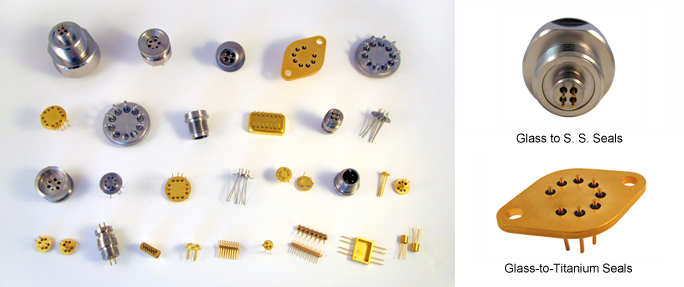
Hermetic Feedthroughs: A Comprehensive Overview

In the hermetic and vacuum-sealed industries, terms such as Vacuum Feedthrough, Electric Feedthrough, Glass-to-Metal Feedthrough, and Ceramic-to-Metal Feedthrough are often used interchangeably. Despite their varied names, these components share a critical function: facilitating the transmission of electrical currents while maintaining an airtight seal.

What Are Hermetic Feedthroughs?
Hermetic feedthroughs are essential in applications requiring strict isolation from environmental contaminants such as air, gas, or moisture. The term “hermetic” refers to the ability to create an airtight barrier, ensuring no gas or liquid leakage. In interconnect systems, hermetic seals and feedthroughs are engineered to prevent the passage of gases through pressure barriers. This technology is crucial in environments where maintaining a vacuum or specific atmospheric conditions is critical, such as aerospace, medical, and industrial applications.

Types of Hermetic Feedthroughs
Complete Hermetics specializes in designing and manufacturing a wide range of feedthroughs, including:

Applications and Durability
Hermetic feedthroughs are built to endure extreme environments. They are extensively used in submersible pumps, downhole drilling instrumentation, cryogenic medical devices, and exploratory implants. Their ability to withstand high pressures ensures consistent performance in critical applications such as surgical instruments and industrial machinery. The laser-welded and soldered designs enhance reliability and functionality across various demanding scenarios.

Complete Hermetics: Your Trusted Partner
Complete Hermetics leads the industry in designing and manufacturing custom hermetic feedthroughs. Their expertise includes prototyping and producing high-quality glass-to-metal and ceramic-to-metal feedthroughs. With a commitment to innovation and reliability, Complete Hermetics delivers solutions optimized for even the harshest conditions, ensuring seamless electrical performance and hermetic integrity.

Optimize your projects with Complete Hermetics‘ state-of-the-art feedthroughs—where precision meets durability.

A Quick Primer on Hermetic Seals and Feedthroughs


As you may know, hermetic feedthroughs allow energy or substances to migrate from outside a hermetically-sealed area to the inside. Maintaining hermetic seals is important with a feedthrough, but providing electrical isolation is also key. Strict performance standards call for no leakage while ensuring that a powerful vacuum remains.

Constructing Hermetic Feedthroughs

A hermetic feedthrough is created using similar techniques to creating hermetic seals. Its glass-to-metal construction incorporates molten glass that can be bonded tightly to metal. To achieve this feat, the glass must be heated to between 1,400 and 1,600 degrees Celsius. Some feedthroughs incorporate ceramic-to-metal or electrical sealing. Hermetic feedthroughs can fall into one of three unique categories:

  • Low-voltage
  • Water-cooled/RF
  • High-voltage

Critical Performance Standards

A high-quality feedthrough can resist extreme temperature shifts, changes in pressure and huge swings in humidity levels. When plated, feedthroughs can also resist corrosion and handle wire bonding or soldering. Depending on product specifications, a feedthrough may need to tolerate even more extremes without so much as a tiny amount of leakages. For feedthroughs used in medical equipment, such super-strict production standards are necessary.

Complete Hermetics develops and manufactures hermetic seals and feedthroughs that deliver the dependability and durability needed in your applications. Besides our standard feedthroughs, we can also design custom versions that meet your needs. Call us at (714) 265-1238 or fill in the contact form for your needs  of hermetic seals and feedthroughs now.

The Creation of Hermetic Feedthroughs

Hermetic feedthroughs are designed specifically to all some substances or energy to pass from inside or outside a hermetically-sealed area to the other side. The feedthroughs must deliver both hermeticity and electrical isolation. They must be secure enough to prevent even the smallest degree of leakage while maintaining a powerful vacuum. There are three main types of hermetic feedthroughs: low voltage, water-cooled and RF (high frequency), and high-voltage feedthroughs. Applications for these items include furnaces, analysis equipment, satellite instrumentation, particle accelerators, and X-ray equipment.

How Is the Hermetic Seal Achieved?

How are hermetic feedthroughs achieved? When a glass-to-metal hermetic feedthrough is desired, industry leaders use high temperatures to melt glass to the point that they can be tightly bonded to metal. When done correctly, these feedthroughs can be used in applications such as those involved in electrical situations. These products are highly resistant to dramatic temperature changes, as well as fluctuations in pressure and humidity. Many of these products are plated to resist corrosion as well as improving the items capacity for wire bonding or soldering. Naturally, the pin and body formation of some hermetic feedthroughs require even tougher standards of excellence. This is the case for items destined to be found in medical equipment, especially used in diagnosis and sensing.

Choosing the Right Hermetic Feedthrough and Seal

Although you’ve developed a system that requires a hermetic feedthrough and seal, you may not have the knowledge and experience to fully know what type of system and materials should be used to be most effective when your product is in use. Our engineers specialize in hermetic feedthroughs and seals in many different industries to help you move forward with your project.

There are many different ways to create the vacuum and hermetic feedthrough. In a glass-to-metal seal, the methodology of design and development depend on multiple factors. There are plating capabilities which let the hermetic seal work better under different conditions. If your project operates under higher voltage or temperatures, a ceramic-to-metal application may the right product to fit your needs. Because we have worked with medical, military, optics, and aerospace organizations, we have the depth of knowledge to design a prototype to meet your specifications.

Discuss your project with our engineers to find the perfect hermetic feedthrough and sealing system that matches your industry. We design and manufacture custom products that work under specific conditions. Our products are tested before use to ensure the reliability of the seal and feedthrough. We understand that you need the materials to fit the scope and scale of the project while managing your budget. Contact us and let us help.