
Reliable Hermetic Vacuum Electrical Feedthroughs

What Is a Vacuum Feedthrough?

Vacuum feedthroughs allow electrical current or signals to pass into or out of hermetic or vacuum systems while maintaining airtight integrity. The terms vacuum feedthrough, electric feedthrough, glass feedthrough, and ceramic feedthrough are often used interchangeably, but all serve the same fundamental purpose: preserving hermeticity across pressure boundaries.

Importance of Hermeticity in Electrical Systems

In electrical and vacuum systems, hermeticity prevents gas leakage that can disrupt pressure stability or damage sensitive electronics. Feedthroughs must maintain electrical insulation and mechanical strength under thermal cycling, vibration, and pressure variation.

Glass-to-Metal and Ceramic-to-Metal Options

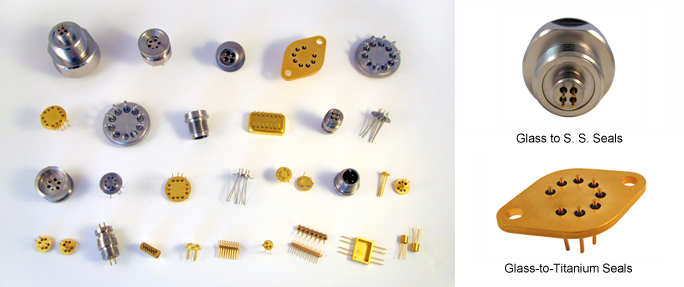
Complete Hermetics manufactures both glass-to-metal feedthroughs and custom ceramic-to-metal feedthroughs. Glass-to-metal feedthroughs are cost-effective and reliable for moderate temperatures and pressures, while ceramic-to-metal feedthroughs support higher voltages, higher temperatures, and harsher environments.

Custom Feedthrough Configurations

Vacuum electrical feedthroughs can be customized with multi-pin layouts, bulkhead mounting, and laser-welded or solder-in contacts to meet specific electrical and mechanical requirements. Custom configurations allow engineers to optimize space, reduce leak paths, and improve system integration.

Applications in Critical Industries

Vacuum electrical feedthroughs are essential in aerospace, medical technology, semiconductor manufacturing, energy systems, and scientific research, where reliable electrical penetration of sealed environments is required.

Contact Complete Hermetics Today for Your Hermetic Capabilities

Complete Hermetics designs and manufactures vacuum feedthroughs, glass-to-metal feedthroughs,  ceramic-to-metal feedthroughs, hermetic connectors, and hermetic headers for extreme environments. In addition, the company provides battery end seals, TO headers, power packages and custom hermetic solutions to support complex systems. From engineering support to production, Complete Hermetics delivers dependable hermetic feedthrough technology worldwide.

High-Vacuum Feedthroughs for Critical Systems

What Is a High-Vacuum Feedthrough?

High-vacuum feedthroughs are specialized hermetic components that allow electrical power or signals to pass through vacuum or pressure boundaries without leakage. In vacuum environments, even microscopic leaks can compromise system performance, contaminate sensitive processes, or cause equipment failure. High-vacuum feedthroughsare therefore essential in applications where stable pressure control and long-term reliability are required.

Hermeticity and Vacuum Integrity

Hermeticity refers to the condition of being completely air- or gas-tight. In vacuum systems, hermetic feedthroughs prevent gas migration through pressure barriers while maintaining electrical insulation and mechanical stability. These components are commonly validated using helium leak detection to ensure ultra-low leak rates suitable for high-vacuum and ultra-high-vacuum environments.

Glass-to-Metal and Ceramic-to-Metal Feedthroughs

Complete Hermetics designs and manufactures both glass-to-metal feedthroughs and ceramic-to-metal feedthroughs for high-vacuum applications. Glass-to-metal feedthroughs provide excellent electrical insulation and cost efficiency, while ceramic-to-metal feedthroughs are preferred for higher temperatures, higher voltages, and harsher operating conditions. Material selection is based on vacuum compatibility, thermal expansion matching, and electrical performance requirements.

Precision Engineering and Testing

High-vacuum feedthroughs must be manufactured with extremely tight tolerances to maintain vacuum stability over extended operating periods. Materials such as stainless steel, Kovar, titanium, and high-purity ceramics are selected for low outgassing and corrosion resistance. Rigorous inspection and testing ensure consistent electrical performance and long-term hermetic integrity.

Applications Across Industries

High-vacuum feedthroughs are widely used in semiconductor fabrication equipment, aerospace simulation chambers, medical imaging systems, research laboratories, and energy technologies where controlled environments are essential.

Engineering Expertise You Can Trust

Complete Hermetics manufactures high-vacuum feedthroughs, glass-to-metal feedthroughs,  ceramic-to-metal feedthroughs, hermetic connectors, and hermetically sealed packages engineered for extreme environments. In addition to vacuum solutions, the company provides battery end seals, hermetic headers, and power packages for aerospace, defense, medical, and industrial applications. From prototype development to production, Complete Hermetics delivers precision hermetic solutions with proven reliability.

Vacuum Feedthroughs for Hermetic Electrical Systems

What Is a Vacuum Feedthrough?

Vacuum feedthroughs are essential components that allow electrical current or signals to pass into or out of a sealed or vacuum environment without compromising hermetic integrity. The terms Vacuum feedthrough, Electric Feedthrough, Glass Feedthrough, Glass-to-Metal Feedthrough, Ceramic Feedthrough, and Ceramic-to-Metal Feedthrough are often used interchangeably within the hermetic and vacuum industries. Regardless of terminology, the function remains the same: maintaining an airtight, gas-tight seal across a pressure boundary.

Why Hermeticity Matters

Hermeticity is defined as the condition of being completely air- or gas-tight. In interconnect applications, hermetic technology prevents gases, moisture, and contaminants from migrating through connectors or feedthroughs. Even microscopic leaks can disrupt system performance, contaminate sensitive processes, or cause long-term corrosion and electrical failure.

Glass-to-Metal vs. Ceramic-to-Metal Feedthroughs

Complete Hermetics designs and manufactures both glass-to-metal feedthroughs and custom ceramic-to-metal feedthroughs, allowing engineers to select the best solution based on temperature, voltage, pressure, and environmental demands. Glass-to-metal feedthroughs offer excellent electrical insulation and cost efficiency, while ceramic-to-metal feedthroughs provide superior performance in high-temperature, high-voltage, and harsh environments.

Electrical Performance and Long-Term Reliability

In addition to maintaining hermetic integrity, vacuum feedthroughs must provide stable electrical performance over long service lifetimes. Factors such as insulation resistance, dielectric strength, and contact stability are critical in high-vacuum and high-pressure environments. Poorly designed feedthroughs can lead to signal leakage, electrical noise, or insulation breakdown over time. By using proven glass-to-metal and ceramic-to-metal feedthrough technologies, systems benefit from consistent electrical isolation and reduced failure risk. This makes hermetic feedthroughs ideal for mission-critical systems where downtime, recalibration, or maintenance access is limited or impossible.

Custom Prototypes & Engineering Support

Every application is unique. Complete Hermetics specializes in custom prototypes for hermetic feedthroughs, working closely with customers to meet precise electrical, mechanical, and environmental specifications. Feedthroughs can be configured for laser-welded or solder-in installation, multi-pin layouts, and bulkhead mounting options.

Industries & Applications

Vacuum feedthrough are widely used in aerospace, defense, medical devices, semiconductor manufacturing, energy systems, and high-vacuum research equipment, where long-term reliability is non-negotiable.

Contact Complete Hermetics Today for Your Hermetic Capabilities

Complete Hermetics is a custom manufacturer of vacuum feedthroughs, glass-to-metal feedthroughs,  ceramic-to-metal feedthroughs, hermetic connectors, and hermetically sealed packages engineered for extreme environments. In addition to feedthrough solutions, the company provides battery end seals, hermetic headers, and power packages for mission-critical applications. From prototype to production, Complete Hermetics delivers precision hermetic solutions backed by deep engineering expertise.

Vacuum Feedthroughs and Bulkhead Hermetic Solutions

Why Vacuum Feedthroughs Are Critical

Vacuum feedthroughs are specialized hermetic components that allow electrical power or signals to pass through vacuum or pressure barriers without leakage. Even microscopic leaks can compromise vacuum integrity, contaminate sensitive processes, or disrupt system performance. As a result, vacuum feedthroughs are essential in applications requiring precise environmental control.

High-Vacuum and Bulkhead Designs

Hermetic bulkhead feedthroughs provide multiple electrical pathways through a single flange-mounted interface. This design reduces the number of enclosure penetrations, improving system reliability and simplifying installation. Bulkhead feedthroughs are commonly used in high-vacuum chambers, pressure vessels, and sealed instrumentation housings.

Material Compatibility and Precision Engineering

Vacuum feedthroughs are manufactured using materials such as stainless steel, Kovar, titanium, and high-purity ceramics to ensure compatibility with vacuum environments. These materials exhibit low outgassing, excellent thermal stability, and corrosion resistance. Precision manufacturing and sealing techniques are required to meet stringent leak-rate specifications, often verified through helium leak testing.

Performance in Sensitive Systems

In vacuum systems, performance margins are extremely narrow. Feedthroughs must maintain electrical insulation, mechanical stability, and hermetic integrity under thermal cycling, vibration, and pressure differentials. Poorly designed feedthroughs can lead to system downtime, safety risks, or costly repairs.

Critical Applications

Vacuum feedthroughs are widely used in semiconductor fabrication equipment, aerospace simulation chambers, research laboratories, medical imaging systems, and high-energy physics instrumentation.

Contact Complete Hermetics Today for Your Hermetic Solutions

Complete Hermetics designs and manufactures custom vacuum feedthroughs and hermetic bulkhead feedthroughs, including multi-pin configurations, glass-to-metal and ceramic-to-metal seals, and vacuum-rated assemblies. The company also supplies hermetic connectors, headers, hermetic packages, and battery end seals to support fully integrated systems. With rigorous testing and precision engineering,  Complete Hermetics delivers vacuum solutions customers can depend on.

Vacuum Feedthroughs for High-Integrity Sealed Systems

Why Vacuum Feedthroughs Are Essential

Vacuum feedthroughs allow electrical, optical, fluid, or mechanical transfer into or out of a sealed vacuum chamber without compromising the chamber’s integrity. They are crucial in semiconductor processing equipment, scientific research instruments, aerospace simulation chambers, and industrial high-temperature vacuum furnaces. Even the slightest leak can affect process quality, research accuracy, or equipment performance—making hermetic sealing absolutely essential.

Design Requirements for High-Vacuum Environments

Vacuum feedthroughs require materials that tolerate thermal expansion, pressure gradients, plasma exposure, outgassing, and radiation. Complete Hermetics engineers each feedthrough using precision glass-to-metal or ceramic-to-metal bonds calibrated to maintain ultra-low leak rates under severe operating conditions. These feedthroughs maintain performance from cryogenic to extreme high-temperature environments.

Configurations & Materials

Vacuum, electric, glass, and ceramic feedthroughs—often used interchangeably—serve the same core purpose: to route electrical current into or out of a hermetic or vacuum system while preventing any gas leakage. Complete Hermetics designs and manufactures custom glass-to-metal and ceramic-to-metal feedthroughs, including multi-pin and bulkhead hermetic feedthroughs that provide multiple electrical paths through a single flange. Available in laser-weld or solder-in styles, these feedthroughs deliver reliable performance in harsh environments. They are widely used in submersible pumps, downhole drilling tools, exploration instruments, implantable medical devices, and cryogenic surgical probes, where stable electrical continuity and long-term hermeticity are mission-critical.

Applications in High-Tech Sectors

Vacuum feedthroughs support:

  • Plasma etching & PVD/CVD semiconductor tools
  • Space environment simulation chambers
  • Ion beam accelerators & laboratory research equipment
  • Industrial furnaces & metallurgical processing
  • Aerospace test stands requiring high vacuum integrity

Testing & Verification

Every feedthrough undergoes low-helium-leak testing, electrical resistance measurement, thermal cycling, and long-duration vacuum compatibility validation. These processes guarantee reliability in systems where contamination or pressure loss cannot be tolerated.

Contact Complete Hermetics Today for Your Hermetic Solutions

Complete Hermetics provides high-performance vacuum feedthroughs and hermetic sealing technologies. From glass-to-metal or ceramic-to-metal configurations, each feedthrough is engineered with exacting precision to meet your application requirements.

Custom Hermetic Feedthroughs

What Are Electrical Feedthroughs For?

You might not think that there are many components that can be found in X-ray machines, transformers and furnaces. But electrical feedthroughs are commonly used in a wide variety of technologies to help make sure that electricity doesn’t escape and cause malfunctions. It is important to know what these feedthroughs are used for and to appreciate this important piece of technology that keeps so many different technologies running.

The Importance of Vacuums 

Creating a vacuum guarantees that the electricity being transported from one part of a machine to another does not get out. Vacuum feedthroughs effectively make sure that the electricity is distributed safely.

Using Seals

The key to creating a vacuum is the type of seal that is used. Hermetic feedthroughs use glass-to-metal seals and ceramic seals to create this vacuum. When building a new seal, it is extremely important that the materials used are able to withstand intensive use and not break down over time.

This is why many seals are made with glass and ceramics; these materials are designed to withstand extreme temperatures, as well as other wear and tear. Many of these seals are used in technology like furnaces that operate at extreme temperatures. Making sure the seals do not break down easily will make sure the machine runs smoothly.